


Buying a Second Home in Mallorca: A Guide for International Buyers

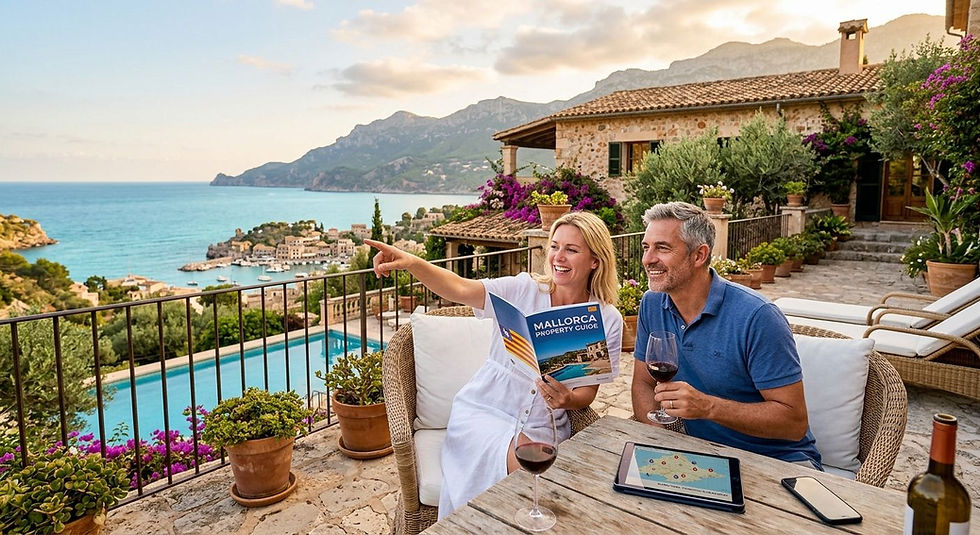
For many international buyers, owning a second home in Mallorca is about far more than purchasing property. It is about having a place to return to, spend time with family, enjoy the Mediterranean lifestyle and create lasting memories in one of Europe’s most appealing island destinations.
For some, the ideal property is a traditional townhouse in a historic village. For others, it is a contemporary villa overlooking the sea, a peaceful country finca or an apartment within walking distance of the beach.
Yet buying a second home requires more than finding a property that looks beautiful in photographs. Purchase costs, legal and planning considerations, ongoing maintenance and tax obligations all influence whether a property will be the right choice in the long term.
As a real estate advisor specialising in Mallorca, particularly Pollença and the north of the island, I believe a successful purchase begins with understanding how you intend to use the property and assessing whether it genuinely meets your needs.
This guide explores the key considerations for international buyers planning to purchase a second home in Mallorca.
1. Define what you want from your second home
Before arranging viewings, take the time to establish how you intend to use your property.
A home used for a few summer weeks has different requirements from one where you plan to spend several months each year, work remotely or eventually spend longer periods of time.
Consider the following questions:
Will you mainly visit in summer, or do you also want to enjoy Mallorca during the winter?
Would you prefer a coastal property, a traditional village house or a rural finca?
Do you need additional bedrooms for family and guests?
Are you looking for a move-in-ready home, or would you consider a renovation project?
Is the property exclusively for personal use, or are you considering rental income?
Who will look after the property while you are abroad?
These decisions help establish realistic search criteria and prevent you from spending time on properties that do not suit your lifestyle.
If you are at the beginning of your property search, explore our guide for property buyers in Mallorca for further guidance on organising your search and navigating the purchase process.
2. Choose the right location in Mallorca
Location has a direct influence on how you experience your second home. Mallorca offers a remarkable variety of settings, and choosing the right one can make the difference between a property you use regularly and one that remains empty for much of the year.
Pollença: character, culture and authentic village life
Pollença appeals to buyers who appreciate historic architecture, traditional streets, independent restaurants and a strong sense of local identity.
Its property market includes traditional townhouses, renovated homes, villas and rural fincas. The area can be particularly attractive to buyers looking for a combination of culture, privacy and access to the landscapes of northern Mallorca.
Port de Pollença: Mediterranean living by the sea
Port de Pollença offers a different lifestyle, centred around the beach, marina, seafront promenade and outdoor activities.
Apartments and penthouses close to the sea appeal to buyers who value convenience and easy access to restaurants and services. Villas in the surrounding residential areas offer a different balance of privacy, outdoor space and coastal living.
Cala Sant Vicenç: tranquillity and natural surroundings
Cala Sant Vicenç is known for its sheltered coves, dramatic coastal scenery and quieter residential atmosphere.
It may suit buyers seeking a peaceful retreat, particularly those who prioritise privacy and natural surroundings while remaining within reach of Pollença and Port de Pollença.
Rural fincas: space, privacy and a different pace of life
Rural properties can offer generous plots, gardens, open views and a greater sense of seclusion.
However, they require careful assessment. Access, water and electricity supplies, planning status, existing buildings and ongoing maintenance can vary considerably from one property to another.
A lower purchase price does not necessarily mean a more straightforward acquisition. The property's legal and planning position, condition and future maintenance requirements all need to be understood before making a commitment.
To compare locations in more detail, explore our guide to the areas of Mallorca. It can help you assess which setting best suits your lifestyle, from traditional villages to coastal areas in the north of the island.
3. Calculate the full cost of ownership
One of the most common mistakes when buying a second home is focusing exclusively on the asking price.
The actual cost of acquiring a property includes taxes and transaction expenses. You must also account for the annual cost of owning and maintaining a home that may remain empty for several months each year.
Purchase taxes and transaction costs
The applicable taxes depend on the type of property and the circumstances of the transaction.
In general:
Resale properties: are usually subject to Spanish property transfer tax (ITP), under the applicable Balearic Islands rules.
New-build properties purchased directly from a developer: are generally subject to VAT, with stamp duty (AJD) potentially applicable as well.
Additional costs: may include notary fees, Land Registry fees, independent legal advice, technical inspections and mortgage-related expenses.
The amount payable depends on the specific transaction and the rules in force at the time of purchase. Obtain a tailored estimate before committing to a property rather than relying on a general percentage.
Annual running costs
Your ongoing budget should also allow for:
Local property tax (IBI) and applicable municipal charges.
Buildings and contents insurance.
Electricity, water, internet and other utilities.
Community fees, where applicable.
Garden and swimming-pool maintenance.
Cleaning and preparation before each visit.
Repairs and preventative maintenance.
Property inspections and supervision while you are abroad.
A villa with a garden and pool will generally require a different maintenance budget from an apartment. A rural finca may involve additional considerations, such as access, private installations and the upkeep of larger outdoor areas.
The objective is to understand the true cost of ownership before deciding which type of property makes financial and practical sense.
4. Buying from abroad: prepare the process in advance
Purchasing property in Mallorca while living in another country is entirely possible, but careful preparation makes the process considerably easier.
Depending on your circumstances, you may need to arrange:
A Spanish foreigner identification number (NIE), where required.
The identification and supporting documents requested by the professionals and financial institutions involved.
The transfer of purchase funds from your country of residence.
A Spanish bank account, where useful or necessary for your transaction.
Mortgage financing, if applicable.
A power of attorney if you cannot attend certain formalities in person.
The precise requirements depend on your nationality, tax residence, ownership structure and individual circumstances.
If you are specifically considering buying in Pollença, our guide to buying property in Pollença as a foreign buyer provides a more location-focused starting point for understanding the purchase process in this part of Mallorca.
Plan international transfers carefully
If your purchase funds are held abroad, speak to your bank or an international currency specialist well before completion.
Check exchange rates, transfer fees, processing times and the documentation that may be required to demonstrate the source of funds.
Large transfers should be planned in advance rather than left until the final days before signing. Delays in transferring funds can complicate an otherwise straightforward transaction.
5. Carry out proper due diligence before committing
A property may look ideal during a viewing and still present legal, planning or technical issues that affect its value or intended use.
Before signing a binding agreement or committing a substantial deposit, it is important to investigate the property thoroughly.
Key checks may include:
Ownership and any registered charges or encumbrances.
Consistency between the Land Registry, the Cadastre and the physical property.
Planning status and the legality of existing buildings.
Relevant licences, permits and available documentation.
The condition of the structure, installations and outdoor areas.
Outstanding costs or obligations affecting the property.
Contract terms, deadlines and the consequences of failing to complete.
These checks are particularly important for older houses, rural fincas and properties that have undergone extensions or renovations.
It is also important to understand that cadastral registration alone does not establish that every building or extension complies with planning regulations.
A thorough review can identify risks before they become expensive problems. For a more detailed explanation of the checks involved, read our guide to property due diligence in Mallorca: what to check before buying, which explores the legal, planning and technical considerations buyers should understand before committing to a property.
6. Consider how the property will work throughout the year
Even if you initially intend to use your home mainly during the summer, it is worth considering how comfortable and practical it will be during other seasons.
Orientation, ventilation, insulation, damp, heating and window quality can all affect comfort.
If you plan to spend time in Mallorca during winter or work remotely from the property, check internet connectivity, access, nearby services and the practicality of maintaining a comfortable indoor temperature.
Outdoor living is another important consideration. A sunny terrace, a manageable garden or a well-designed swimming pool can enhance your experience, but each brings its own maintenance requirements.
The best property is not necessarily the largest or the one with the most features. It is the one that works naturally with the way you intend to live.
7. Understand the tax implications of owning property in Mallorca
Buying a second home in Mallorca does not automatically make you a Spanish tax resident. Tax residence depends on the applicable legal criteria and your individual circumstances, rather than simply owning a property.
However, non-resident ownership can still create Spanish tax obligations.
Depending on how the property is used and your personal circumstances, these may include:
Tax on imputed income for an urban property used personally or left vacant.
Tax on rental income, if the property is let.
Tax obligations arising from a future sale.
Relevant tax returns and reporting requirements.
The interaction between Spanish tax rules and the rules of your country of residence.
In certain circumstances, a non-resident may need to file a Spanish tax return using Form 210. The applicable obligations depend on the individual case.
Before purchasing, seek advice from a tax professional experienced in Spanish non-resident taxation and, where relevant, international tax treaties.
Understanding these obligations in advance helps you budget realistically and avoid unexpected administrative or financial complications.
This article provides general information and should not be treated as individual legal or tax advice.
8. Do not assume the property can be used for holiday rentals
Some international buyers intend to rent out their second home when they are not using it. Rental income may seem like a useful way to offset running costs, but it is important not to base a purchase on income that has not been verified.
The ability to operate a tourist rental depends on the applicable regulations, the property's location and classification, and the relevant authorisations and requirements. Restrictions may also vary according to the type of property and its legal status.
Do not assume that a property can be legally rented to tourists simply because it has previously been advertised as holiday accommodation. Nor should you assume that an existing authorisation can automatically be transferred to a new owner.
If holiday rentals are an essential part of your financial plan, verify the property's eligibility with qualified professionals before signing.
Your purchase should still make sense if tourist letting is not possible.
9. Plan for property maintenance while you are abroad
A second home needs attention even when you only visit for a few weeks each year.
Before buying, consider who will be able to inspect the property and respond to problems while you are away.
Depending on the property, you may need to arrange:
Regular inspections.
Cleaning before your arrival.
Garden and swimming-pool maintenance.
Checks for damp and ventilation issues.
Monitoring of utilities and installations.
Coordination of repairs.
Preparation after extended periods without use.
In a home that remains closed for months, identifying a leak, damp problem or equipment failure early can prevent more extensive damage.
Accessibility and the availability of reliable local professionals are also worth considering, particularly for rural properties.
These practical details form part of the real cost of owning a second home and should be assessed before choosing between an apartment, villa or finca.
10. Build the right professional team
Buying from another country can involve coordinating viewings, documentation, negotiations and independent checks from a distance.
Having the right professionals in place can make the process clearer and more manageable.
Depending on the transaction, your team may include:
An independent property lawyer.
A tax adviser experienced in non-resident buyers.
An architect or qualified technical professional to assess the building and planning position where appropriate.
A notary to formalise the purchase deed.
A real estate advisor with detailed local knowledge.
If you want professional representation focused on your interests throughout the search, property assessment and negotiation, discover my Buyer's Agent service in Mallorca.
My role is to help you compare opportunities objectively, understand the local market and coordinate your property search around your priorities. Legal, tax and technical checks should be carried out by the appropriately qualified professionals.
11. A practical process for buying with confidence
Before reserving a property, I recommend following a structured approach:
Define your priorities. Decide how you will use the home and which features are essential.
Establish a realistic total budget. Include purchase taxes, transaction costs, maintenance and potential renovation expenses.
Choose your preferred locations. Compare lifestyle, services, access and the character of each area.
Shortlist suitable properties. Focus on homes that meet your core requirements.
Request the available documentation. Identify the legal, planning and technical checks that need to be completed.
Review the contract before committing. Understand the conditions, deadlines and consequences of non-completion.
Plan ownership after completion. Consider tax obligations, maintenance and property supervision.
A structured approach cannot eliminate every risk, but it can help you make better-informed decisions and avoid overlooking important details.
Conclusion: Find a second home that fits your life
Buying a second home in Mallorca can be a rewarding way to enjoy the island and build a long-term property asset. To make the right decision, however, it is important to look beyond attractive photographs and consider location, ownership costs, legal status and ongoing maintenance.
Northern Mallorca offers a wide range of possibilities, from traditional townhouses in Pollença to coastal properties in Port de Pollença, homes near Cala Sant Vicenç and rural fincas offering greater privacy.
The right choice depends on your priorities, how you intend to use the property and the level of maintenance you are comfortable managing.
Considering buying a second home in Mallorca?
If you are looking for a property in Pollença, Port de Pollença, Cala Sant Vicenç or elsewhere in northern Mallorca, I can help you clarify your requirements, compare locations and organise a search tailored to your needs.
Discover my Buyer's Agent service in Mallorca and tell me what kind of property you have in mind.
The best purchase does not begin with finding a beautiful house. It begins with understanding what you need and making sure the right property genuinely meets your expectations.


Comments